Back to Ki-Aikido Israel
Hands-on in-person seminar
氣圧法

Discover Kiatsu

Learn to relieve tension, support your body's recovery, and apply practical touch techniques — based on the method of Master Koichi Tohei.

Practical techniques for pain and tension relief
Self-help methods for everyday life
Help your loved ones through gentle touch
Dima Chulkin — Kiatsu seminar instructor
Dima Chulkin Ki-Aikido instructor, 2nd dan. 19 years of practice, 16 years teaching. Practicing physics engineer, MEPhI graduate (theoretical physics).
Israel · beginners welcome · no prior experience needed

What is Kiatsu?

Kiatsu (, Kiatsu-ho) is a method of natural healing through gentle touch. The practitioner applies light pressure using fingertips or palms while extending Ki — supporting the body's own ability to recover and rebalance.

Kiatsu was developed by Koichi Tohei (1920–2011), the first person to receive 10th Dan in Aikido and the founder of Shin Shin Toitsu Aikido (Ki-Aikido). He created Kiatsu as an integral practice within the Ki-Aikido system.

Kiatsu is not a medical treatment. It is not massage, acupressure, or any form of alternative medicine. It is a practical method for supporting natural well-being — a skill that can be learned and shared with others.

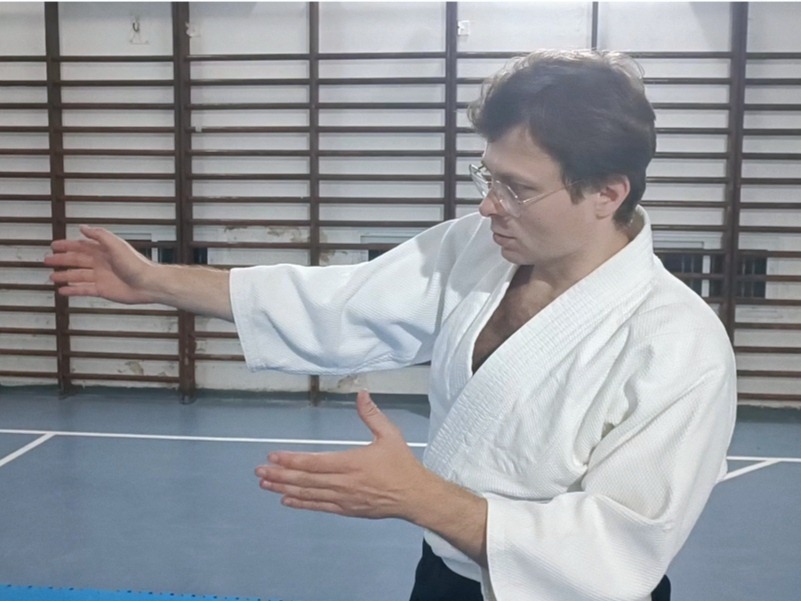
Kiatsu demonstration — finger pressure on the shoulder

Origin and History

From an ancient human instinct to a systematic practice

In Japanese, the word for "treatment" is (te-ate), which literally means "to place hands on." This reflects a universal human instinct: when someone is in pain, we naturally reach out and touch the affected area. A parent places a hand on a child's forehead; we rub a sore shoulder. This impulse is deeply rooted in human nature.

At age 16, the young Koichi Tohei developed pleurisy from intense judo training. Doctors described his chest as a "cracked cup" and gave a grim prognosis. During his long recovery, Tohei turned to Zen meditation and Misogi purification practice, discovering that true health comes through unification of mind and body. When he recovered — to the surprise of his doctors, who could not explain the healing — Tohei became deeply convinced that mental training and the cultivation of Ki had been the decisive factor in his return to health.

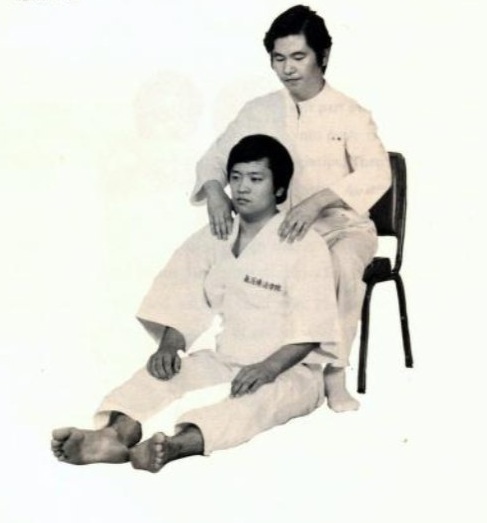
Kiatsu on back — illustration from Koichi Tohei's book

Illustration from: Kiatsu, Koichi Tohei

In February 1944, Tohei was sent to occupied China as an infantry leader. In the harsh conditions of wartime — with no doctors available — he began developing practical principles for healing through extending Ki via the fingertips. These field-tested methods would later become the foundation of Kiatsu.

After the war, Tohei systematized the method based on the Four Principles of Mind-Body Unification that form the foundation of Ki-Aikido. In 1971, he founded the (Ki no Kenkyukai — Ki Society). In 1980, he established the Kiatsu Ryoho Gakuin (Kiatsu Therapy School) at the Ki Society headquarters in Tokyo, creating a formal training path for Kiatsu practitioners. In 1983, he published his book "Kiatsu," documenting the complete method.

Today, Kiatsu is practiced and taught by Ki Society () and at dojos around the world. It remains an integral part of the Ki-Aikido curriculum, reflecting Tohei Sensei's vision that mind-body unification has practical applications far beyond the dojo.
Four Principles Applied to Kiatsu

The same principles that govern Ki-Aikido technique also guide Kiatsu practice

01

Keep One Point

Maintain calm focus at the one point in the lower abdomen. In Kiatsu, this keeps the practitioner centered and stable, preventing tension from transferring to the recipient. A calm mind produces a calm, effective touch.

02

Relax Completely

Release all unnecessary tension from the body. In Kiatsu, relaxed hands and arms allow Ki to flow freely through the fingertips. Tense muscles block the natural flow and reduce effectiveness.

03

Keep Weight Underside

Let your natural weight settle downward. During Kiatsu, this creates a grounded, steady posture. The touch becomes natural and comfortable — neither floating nor pressing — just the right amount of contact.

04

Extend Ki

Direct your attention and energy outward through the point of contact. This is the core of Kiatsu: the practitioner sends Ki through the fingertips to the specific area, supporting the recipient's body in its natural recovery process.

Scientific Evidence

Peer-reviewed research on Kiatsu's effects

Over 20 Years of Practitioner Reports

Over more than two decades, Kiatsu practitioners have noted that regular practice helps them become more attuned to their bodies and maintain overall well-being. Many report a subjective sense of relaxation, release of tension, and improved mood following sessions.

These are personal impressions shared by participants. Kiatsu is not a medical procedure, does not diagnose conditions, and does not replace professional medical care.

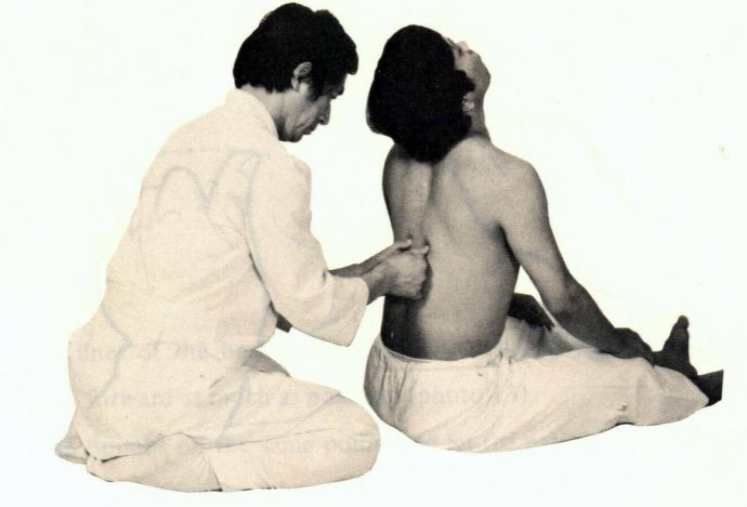
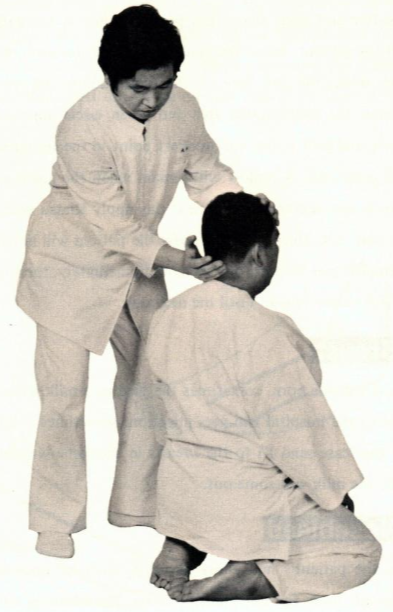
Seated neck Kiatsu — illustration from Koichi Tohei's book

Illustration from: Kiatsu, Koichi Tohei

Beneficial Effects of Kiatsu with Ki Training on Episodic Migraine

Pain Research and Management (2021) · Impact Factor > 3 · Peer-reviewed
DOI: 10.1155/2021/3290879
53% Migraine reduction at 6 months (p < 0.001)
65% Achieved ≥50% reduction in episodes
QoL Significant improvement (p < 0.0001)
Rx Reduced medication use (p < 0.03)

The study enrolled 21 women with episodic migraine. Participants received Kiatsu sessions combined with Ki training over a structured program. At six months, the group showed a 53% mean reduction in migraine frequency. Seven of the 21 subjects achieved 100% reduction — complete cessation of migraines during the study period. Zero adverse events were reported throughout the study.

Separately, Juntendo University in Japan — one of the country's leading medical universities — maintains a doctoral program that includes research on Kiatsu and its physiological mechanisms.

Read the full study on PubMed
Note: Kiatsu is not a substitute for professional medical care. It is a complementary practice that supports the body's natural processes. Always consult a qualified healthcare provider for medical conditions.

Benefits of Kiatsu Practice

Practical advantages for daily life

Pain and Tension Relief

Kiatsu can help relieve muscle tension, stiffness, and discomfort through focused, gentle touch and Ki extension.

Stress Reduction

The practice of deep relaxation and focused attention naturally reduces stress and promotes a sense of calm.

Better Circulation

Gentle pressure combined with Ki extension supports healthy blood flow and helps the body's natural recovery processes.

Self-Help Tool

Many Kiatsu techniques can be applied to yourself — making it a practical skill for managing everyday aches and tension.

Help Training Partners

Aikido practitioners can use Kiatsu to help partners recover from training soreness and minor discomfort on the mat.

Develop Sensitivity

Kiatsu practice refines your ability to sense tension and imbalance through touch — a skill that enhances all areas of life.

Who Is Kiatsu For?

No prior experience required — Kiatsu is accessible to everyone

Anyone curious about natural well-being — Kiatsu requires no special background, physical fitness, or prior training. If you can place your hand on someone's shoulder, you can begin learning Kiatsu.

Aikido and martial arts practitioners — Kiatsu deepens your understanding of Ki and mind-body coordination. It also gives you a practical tool to help training partners on and off the mat.

People dealing with chronic tension or stress — If you carry tension in your neck, shoulders, or back, Kiatsu offers a gentle, drug-free approach to relief that you can practice daily.

Families and couples — Kiatsu is something you can share with loved ones. Parents can help children; partners can help each other. It strengthens connection through caring touch.

Learn from an International Lineage

Our instructors are members of Ki Society (Shin Shin Toitsu Aikidokai), the worldwide organization founded by Koichi Tohei. Our instructors train directly with senior Japanese teachers and bring authentic Kiatsu instruction to Israel.

Kiatsu is taught as part of the Ki-Aikido curriculum and in dedicated seminars. Each seminar combines theory, guided practice, and hands-on experience — so you leave with a skill you can use immediately.

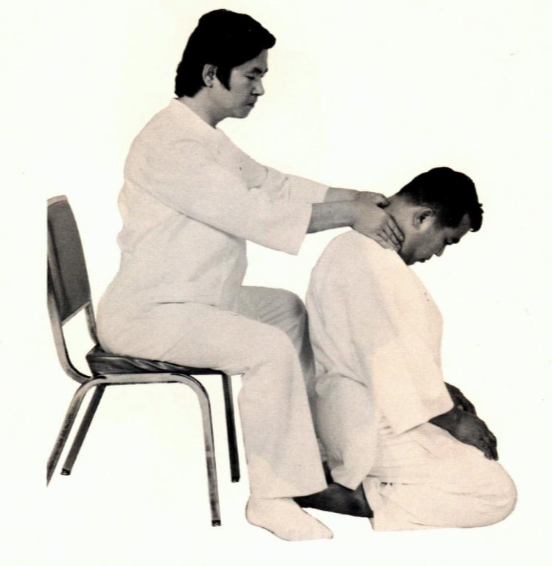
Kiatsu practice — standing technique

Illustration from: Kiatsu, Koichi Tohei

Kiatsu in Action

Watch a short demonstration of a Kiatsu session

What People Say

Feedback from those who have experienced Kiatsu

“I don't quite understand what happens, but after the session I feel so much better. Thank you!”

— Elizabeth

“I'm actually a skeptic, but I tried it and really enjoyed it! I'll definitely come to the seminar.”

Hands-on Kiatsu Seminar in Israel

Led by Dima Chulkin — Ki-Aikido instructor (2nd dan), practicing physics engineer, MEPhI graduate (theoretical physics). Contact us via WhatsApp for the exact date, location, and pricing.

Beginners welcome. Pre-registration required. Limited spots available.

Or call directly: 053-220-6371